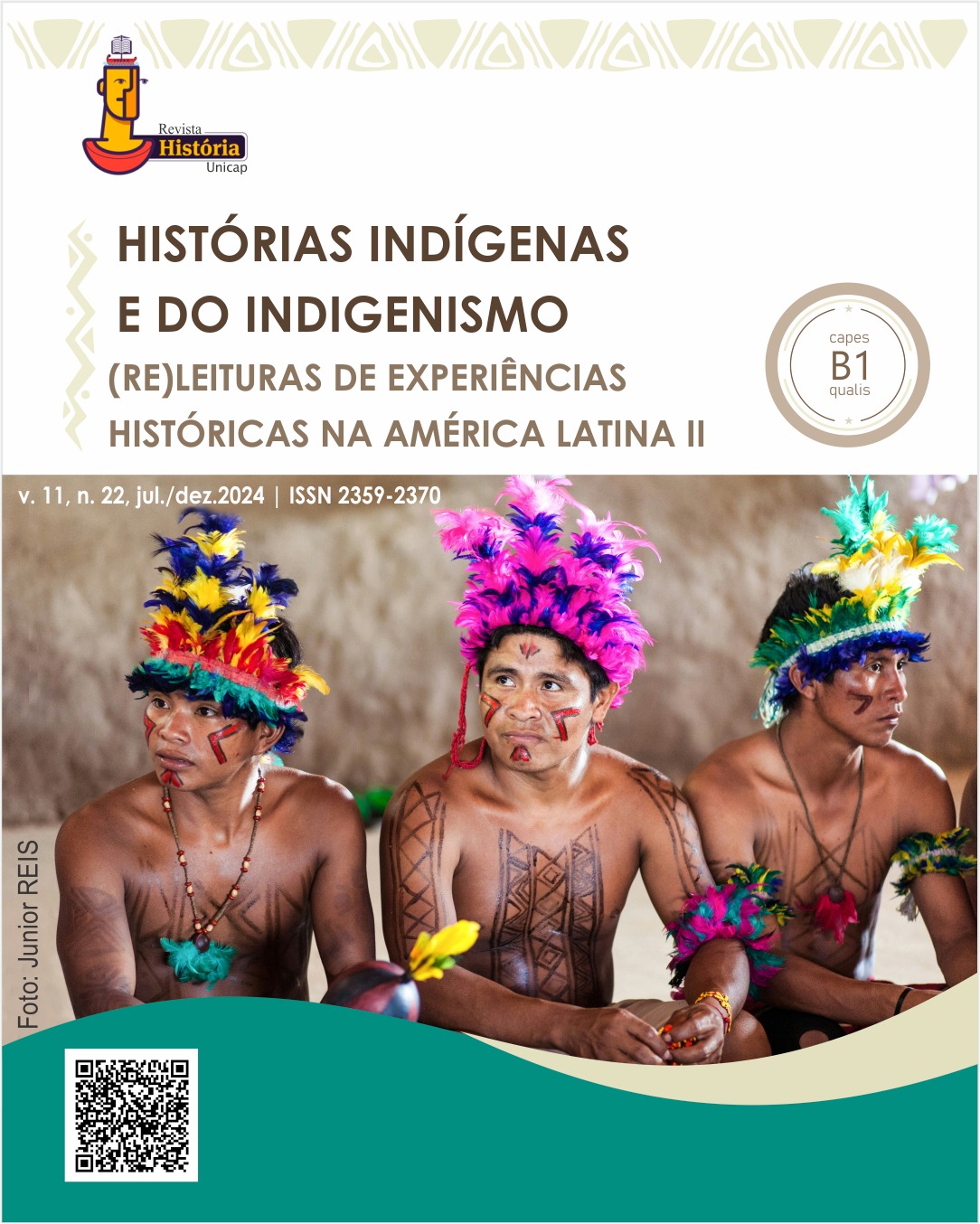
Narrating indigenous student trajectories
AESA-CESA, the History Course and the Fulni-ô
DOI:
https://doi.org/10.25247/hu.2024.v11n22.p07-27Keywords:
indigenous people, Fulniôs, Higher EducationAbstract
When considering the process of entry into higher education for people belonging to indigenous peoples, this work presents an understanding of how higher education contributes to the process of transformation in the lives of these peoples, so that we can analyze the role that the Higher Education Authority of Arcoverde, through the college maintained by this institution, the Higher Education Center of Arcoverde (AESA-CESA), plays or has played in the construction of the trajectories of these people, in the process of intellectual qualification, the resignification of their identities and access to the job market. Within this understanding, the proposal raises questions regarding this relationship between the History course at CESA and the trajectory of Fulni-ô students who had access to this degree and the Higher Education Institution, so that we can collaborate in the sense of thinking about the training processes with indigenous populations, the historical importance that Higher Education Authorities had in educational assistance in the interior of the State, including indigenous populations in a context in which public policies for access to higher education for these populations were scarce. Through the use of the Oral History methodology, it was possible to present the trajectories of the Fulni-ô indigenous people and reflect on the role and place that this institution and the History course occupied in the educational process, thus seeking to reflect on the importance of these populations' access to higher education. In addition, it was possible to understand and highlight the role that the Autarchy has in the process of qualifying and educating these populations and collaborate to build greater visibility regarding this theme and the teaching of indigenous history.
Downloads
References
ABREU, Aurélio M.G. Culturas indígenas do Brasil. São Paulo, Traço, 1987.
ALBERTI, Verena. Ouvir contar: textos em história oral. Rio de Janeiro: FGV, 2004.
BEZERRA, Deisiane da Silva. Com os índios: Padre Alfredo Dâmaso, os Fulni-ô e as mobilizações indígenas no Nordeste. Maceió, AL: Editora Olyver, 2020.
BITTENCOURT, Circe M. F. Ensino de História: fundamentos e métodos. 3. ed. São Paulo: Cortez, 2009.
BRASIL. Lei de Diretrizes e Bases da Educação Nacional, LDB. 9394/1996. BRASIL.
SILVEIRA, Lídia Maria Lima de Cerqueira; SILVA, Edson; MARQUES, Luciana Rosa. Fulni-ô: história e educação de povo bilíngue em Pernambuco. Cadernos de Pesquisa, v. 19, p. 31-41, 2012.
GRUPIONI, Luís Donisete. Formação de professores indígenas: repensando trajetórias. Brasília: Ministério da Educação, Secretaria de Educação Continuada, Alfabetização e Diversidade, 2006.
HALBWACHS, Maurice. Memória Coletiva. São Paulo: Centauro, 2011
INSTITUTO BRASILEIRO DE GEOGRAFIA E ESTATÍSTICA. Censo Brasileiro de 2010. Rio de Janeiro: IBGE, 2012.
MARTINS, Ana Luiza; LUCA, Tânia Regina de. História da Imprensa no Brasil. São Paulo: Contexto, 2008.
MONTENEGRO, Antonio Torres. História oral e memória: a cultura popular revisitada. 3. ed. São Paulo: Contexto, 2001.
MOTA, Thiago. Ensino antirracista na Educação Básica: da formação de professores às práticas escolares. Porto Alegre, RS: Editora Fi, 2021.
SCHRÖDER, Peter (org.). Cultura, identidade e território no Nordeste indígena: os Fulni-ô. Recife: Editora Universitária da UFPE, 2012.
SILVA, Augusto César Acioly Paz. A fundação da Faculdade de Formação de Professores de Arcoverde (1969-1980): memórias, cotidiano e história. In: SILVA, Augusto César Acioly Paz. Cadernos de Pesquisas em Cultura Política, Educação e Diferenças. Vol. 01, Arcoverde: Oxente, 2019. p.13-28.
SILVA, Augusto César Acioly Paz; JÙNIOR, Venicio José da Silva. A revista Peleja: História e desenvolvimento de um periódico acadêmico nos sertões pernambucanos (1979 – 1984). História Unicap, v. 7, n. 13, jan./jun. de 2020. p.286-298.
SILVA, Edson. Os índios na História e a História Ambiental no Semiárido Pernambucano, Nordeste do Brasil. Revista Mutirõ, v. II, nº II, 2021, p. 87-104.
SILVA, Edson; SILVA, Maria da Penha da. (orgs.). Ensino da temática indígena e educação para as relações étnico-raciais. Maceió, AL: Editora Olyver, 2021.
Downloads
Published
Issue
Section
License
Copyright (c) 2024 HISTÓRIA UNICAP

This work is licensed under a Creative Commons Attribution 4.0 International License.
Concedo a Revista História Unicap o direito de primeira publicação da versão revisada do meu artigo, licenciado sob a Licença Creative Commons Attribution (que permite o compartilhamento do trabalho com reconhecimento da autoria e publicação inicial nesta revista).
Afirmo ainda que meu artigo não está sendo submetido a outra publicação e não foi publicado na íntegra em outro periódico e assumo total responsabilidade por sua originalidade, podendo incidir sobre mim eventuais encargos decorrentes de reivindicação, por parte de terceiros, em relação à autoria do mesmo.
Também aceito submeter o trabalho às normas de publicação da Revista História Unicap acima explicitadas.













 A História Unicap está licenciada com uma licença